Greyed Out, Not Ruled Out: The Alpine Storm-Day Playbook for UK Riders
The forecast promised snow. By 9am the mountain had gone missing. One minute you are sliding off the lift with a plan, the next the sky and the slope have merged into one enormous grey duvet and the person ten metres ahead has become a rumour. Welcome to the Alpine whiteout — the weather event that separates a good trip from a grim one, and the reason a bit of pre-trip thinking pays off long before you ever clip in.
This is not a lecture about staying indoors. Storm days can be brilliant. They can also be the day you bruise your confidence, ruin your kit and waste a lift pass squinting at nothing. The trick is to treat flat light like any other mountain condition: read it, respect it, and have a plan that does not involve pretending you can see.
First Rule: Believe the Mountain, Not the Webcam
Alpine webcams are optimists. They catch a bright patch, freeze it, and convince you the resort is basking when the upper mountain is actually inside a cloud. Before you pull on your boots, check the lift status page, the local avalanche bulletin and the piste report. Look at the cloud base, not just the temperature. If the resort is reporting strong wind, fog or closed upper lifts, believe it.
Flat light and a true whiteout are related but not identical. Flat light drains contrast: bumps vanish, shadows disappear, and a gentle roll in the piste suddenly looks like a cliff. A whiteout is worse — you lose the horizon entirely. If you cannot tell where the snow ends and the sky begins, stop. Not because you are soft, but because your eyes are now guessing and your legs are about to follow.
Terrain: Go Low, Go Gentle, Go Marked
When visibility drops, ambition should drop with it. The high glacier, the exposed ridge and the tempting off-piste line are not the places to test your internal compass. Head low. Head to the trees if the resort has them. Stay on marked, groomed pistes and use the piste markers as your handrail. Tree-lined runs give you depth, shape and something to aim at — three things a featureless white slope does not.
Choose the resort sector with the best lift access and the shortest escape route. A storm day is not the time to be stranded on the far side of the mountain relying on one chairlift that is making suspicious noises. Keep your speed down, give other riders room and resist the urge to follow a set of fresh tracks into the murk. Those tracks might belong to a local who knows the mountain; they might also belong to someone who is just as lost as you are.
Kit: Lenses, Layers and a Compass Called Common Sense
If you ride in the Alps regularly, a low-light lens is not a luxury. A rose or yellow-tinted lens can lift contrast in flat conditions, and a spare lens in your jacket pocket is the difference between a usable afternoon and a miserable one. Carry a clear lens if your goggles allow it. Fogged goggles plus flat light is a special kind of punishment.
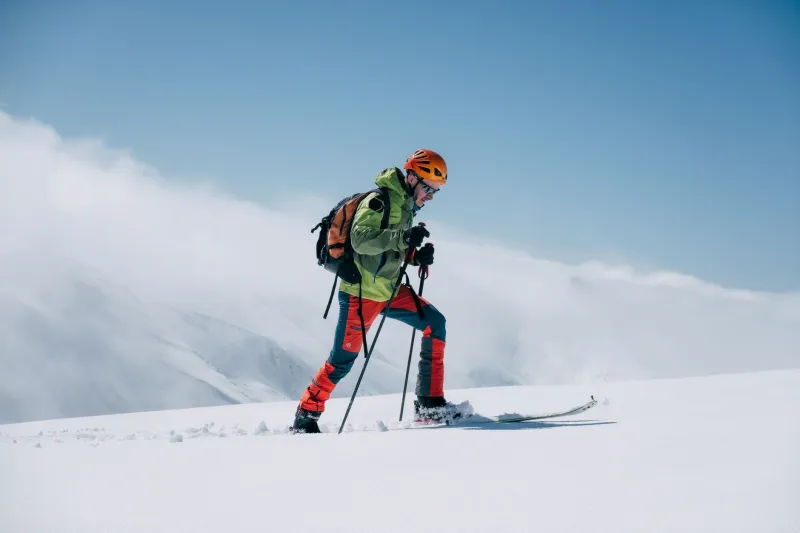
Layers matter too. Storm days are often wet, windy and colder than the village suggests. A proper shell, a warm mid-layer, dry gloves and a buff will keep you functional when the weather turns. Pop a headtorch, a power bank, a snack and a small map in your pack. Your phone is useful until it is cold, wet and out of battery — which is exactly when you need it most. If you are heading anywhere off-piste, that is a separate conversation involving transceivers, probes and a guide. Inbounds storm-day skiing should be simple: stay found.
The Backup Plan That Saves the Pass
Here is the bit UK riders often miss. A short Alpine trip is precious, so it is tempting to force every day onto the snow. But flogging a whiteout day on a six-day pass is not commitment; it is poor accounting. Check the resort app, lift closures and your pass terms before you commit. Some passes offer refunds or deferrals for bad weather, some do not. Know which kind you bought.
Then build a proper Plan B. Alpine resorts are not just lift systems. There is the pool, the spa, the climbing wall, the local museum, the bakery crawl, the train to the next village, the long lunch that turns into a card game. If the upper mountain is shut, swap the ski day for a travel day. Explore the valley. Book a massage. Dry your kit properly instead of leaving it in a soggy heap. A storm day can become the trip's unexpected highlight if you stop treating it as a failed ski day.
For families, this matters even more. A whiteout is not the moment to drag a tired eight-year-old onto a wind-blasted chairlift because the pass is burning a hole in your pocket. Indoor options, a shorter afternoon session or a complete rest day will usually buy more goodwill than a heroic morning of zero visibility.
When to Call It
Call it when the lifts close, when the pisteurs say so, or when you realise you are skiing by memory rather than sight. There is no shame in a long lunch, a valley walk or a pint by the fire while the mountain does its thing. The Alps will still be there tomorrow. Your pass might be a little less used, but your knees, your confidence and your trip will thank you.
Storm days are part of the deal. Pack for them, plan around them and keep your expectations flexible. Greyed out does not have to mean ruled out — it just means you need a better plan than squinting.