Door-to-Lift in Seven: The Alpine Base Test for 2026/27
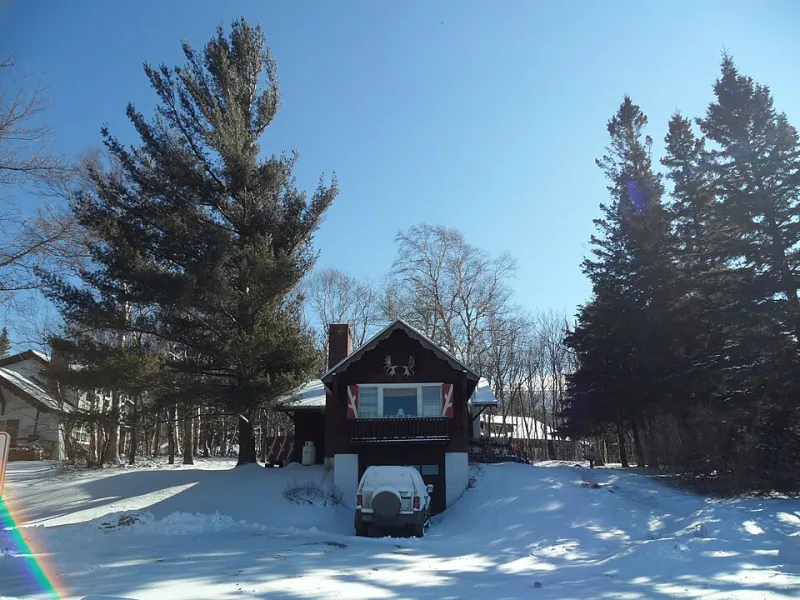
Photo: EgorovaSvetlana, CC BY-SA 4.0, via Wikimedia Commons
Most Alpine accommodation photos sell the same fantasy: timber balconies, a curl of steam off a hot tub, and snow settling on a roof like icing sugar. None of that tells you whether you will spend twenty minutes each morning clomping around in ski boots looking for the right bus stop. For a UK rider with a fixed week, a transfer coach to catch and a lift pass burning a hole in the budget, the daily faff matters more than the thread count.
So here is a simple filter for 2026/27: the seven-minute base test. It is not a law of physics, and it is not a guarantee of a good holiday. It is a way to cut through the brochure bits and ask whether a place actually works for the way you ski, eat and sleep.
Start With the Stopwatch, Not the Star Rating
The first seven minutes are the ones between your front door and the snow. Not in trainers. Not with a coffee in one hand. In ski boots, carrying a board or skis, with a helmet under your arm and a boot bag swinging off your shoulder. On a map, seven minutes on the flat might be roughly 400 metres. Add a slope, a staircase, a road crossing or a lift station tucked behind a car park, and that shrinks fast.
Before you book, open a satellite map and trace the actual route. Check the resort piste map for the nearest lift, then check whether that lift is the one you will actually use. A property can be close to a lift and still be badly placed if that lift serves a beginner zone you will never touch, or if it drops you at the bottom of a mountain you have to traverse to reach the good stuff.
This is where UK riders often get caught. We are used to short breaks and we want to maximise time on snow, so we book the cheapest bed that looks close to the lifts. But close on the booking site is not the same as close in boots. A seven-minute walk to the main lift is a pass. A seven-minute walk to a bus stop that only serves the resort every forty minutes is a rethink.
Boot Rooms Tell You More Than Balconies
A proper boot room is not a garage with a bench and a vague smell of diesel. It is warm, dry and ventilated, with enough space for everyone to kit up without standing on each other's toes. If the listing mentions a heated boot room or a dry room, that is a genuine plus. If it mentions a ski locker and nothing else, ask where the boots are supposed to dry overnight.
Wet boots are not just unpleasant. They are cold, they soften badly, and they can turn a brilliant first morning into a grim trudge to the hire shop. For UK riders flying in with their own boots, this is especially important. You have already spent time and money getting the fit right. Do not let a chilly concrete cupboard undo it.
Aspect matters too. A south- or west-facing balcony is lovely for a beer, but it can mean softer snow on lower slopes by mid-afternoon. A north-facing base may stay colder and hold better snow, but it can feel shaded and bleak in bad weather. Neither is automatically right. The point is to know what you are choosing. If you are chasing spring snow or travelling with beginners, aspect should be part of the conversation, not an afterthought.
The Second Seven: Door to Dinner
The seven-minute rule does not stop at the lift. Your evening base matters too. Can you walk to a supermarket, a bakery or a decent plate of food in seven minutes? If not, is there a reliable bus, and does it run after the lifts close? A quiet hamlet with a stunning view can be perfect if you have a car and self-catering plans. It can be miserable if the last bus leaves before you have finished your pasta.
Check the timetable before you book, not after. Look at the first and last buses, the frequency in bad weather and whether the service is included in your lift pass or costs extra. If you are relying on a resort shuttle, find out where it stops and whether it takes skis and boards. Some buses are brilliant. Some are a rumour with a timetable attached.
This is also where the base examples get interesting. In Morzine, a central village pad gives you easy evening access and a short walk to the Pleney or Super Morzine lifts, but Ardent is the better bet if your main aim is quick access to Avoriaz and you do not mind a quieter evening. In Les Deux Alpes, the front de neige area passes the morning test for many riders, while cheaper accommodation further down the valley can add a bus or a longer walk to the day. In La Clusaz, the village centre is handy for food and atmosphere, but if you plan to ski the Confins side, check how you will get there each morning.
None of those are universal rules. They are prompts. The best base depends on whether you are a first-lift rider, a late-breakfast cruiser, a family with a ski school drop-off, or a group that cares more about dinner than first tracks.
A Booking-Day Checklist
Use this before you commit:
- Trace the route from door to lift in boots, not shoes. Check for stairs, road crossings and uphill sections.
- Measure the walk to the nearest reliable bus stop, not just the nearest lift.
- Check bus frequency, first and last service, and whether bikes, skis and boards are allowed.
- Confirm the boot room is heated, ventilated and big enough for the number of guests.
- Look at the aspect of the property and the slopes you will use most.
- Find the nearest food shop and evening restaurant cluster. Seven minutes is a useful guide.
- Check transfer drop-off. A coach that leaves you at the tourist office can add a taxi or a long walk with luggage.
- Ask about ski storage at the lift station if the walk from the apartment is longer than you would like.
When to Break the Rule
There are good reasons to ignore the seven-minute test. A true ski-in, ski-out property can justify a longer walk to dinner. A bargain apartment with a great boot room can make up for a five-minute bus ride. A quiet hamlet with a car and a group of friends can be exactly the right call. The rule is not there to overrule your judgement. It is there to stop you booking on vibes alone.
For 2026/27, the smart move is to treat accommodation as part of the ski day, not just a place to sleep. The best Alpine base for a UK rider is the one that gets you from kettle to lift without a drama, then gets you from boots off to dinner without a taxi. If it does that in roughly seven minutes at each end, you have probably found a keeper.