The Split That Saves Your Morning: Singles Lanes and Group Logic in the Alps

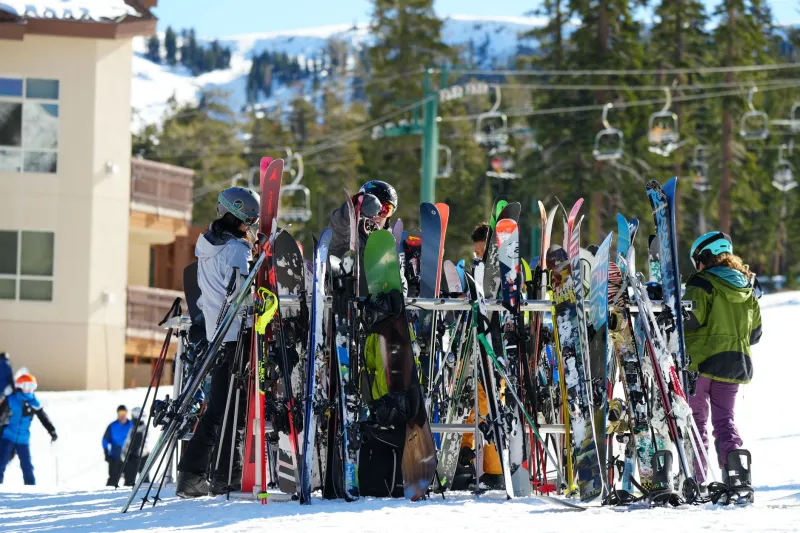
Photo: skiers single rider queue alpine ski lift station, via d2trtkcohkrm90.cloudfront.net
Alpine lift queues are not a test of patience. They are a small, chilly market. On one side: lifts trying to fill every chair. On the other: groups who want to ride together, take a photo, adjust a boot, and generally treat the maze barriers like a village hall. The singles lane is the market’s pressure valve — and for UK riders on a tight week, it is often the difference between a decent morning and a lot of shuffling.
This is not a plea to abandon your mates. It is a case for splitting deliberately, then meeting at the top. Done well, the singles lane is quick, polite and quietly brilliant. Done badly, it is a group of six trying to board together through a lane designed for one, while everyone behind mutters into their neck warmer.
The queue is not a queue — it is a filling problem
Most Alpine chairs and gondolas have a fixed number of seats. A four-person chair wants four bums. A six-pack wants six. The main queue is a rough democratic scrum: groups of all sizes, merged into a line, then peeled off by a liftie who is trying to make the maths work. The singles lane exists because groups leave gaps. Couples, threes, families of five — they all create odd numbers. The singles lane fills those odd numbers with riders who are happy to sit next to a stranger for eight minutes.
That is the whole trick. You are not queue-jumping. You are helping the lift run at capacity. If you can accept that a chair ride is not a social event, you will spend less time in the maze and more time on snow.
When splitting is the smart move
The singles lane pays off when the main queue is long but moving in fits and starts, and when your group is creating gaps. A group of three on a four-person chair is a classic. So is a group of five on a six-pack. If the liftie is visibly hunting for singles, that is your cue.
It also works when your group has different pace settings. Mixed-ability groups often spend half the morning waiting at the top of every lift for the slowest rider, then ski one run together and repeat. That is fine if the aim is a shared day out. It is less fine if two of you want to rack up vert before lunch. A simple split — faster riders take the singles lane, slower riders take the main queue, everyone meets at the top — can keep the peace and the momentum.
But do not split just because the line looks long. If the singles lane is already ten deep and the main queue is flowing, stay put. If the lift is a slow two-person drag or a small gondola, singles gains are marginal. And if your group includes young children, check the resort’s rules and your own comfort levels before sending anyone off alone. A singles lane is not a childcare solution.
Reading the flow before you commit
Stand back for thirty seconds. You are looking for three things: how many lanes feed the lift, how many seats are going empty, and whether the liftie is actively calling for singles.
A good singles lane usually has a separate entrance close to the load point. You will see people peeling off from the main queue and slotting in. If the lane is a confusing rope-off that merges back into the main scrum, it may be slower than it looks. Watch a full cycle — one chair or gondola cabin — and count the empty seats. If you see two or three empties per cycle, singles is worth a go. If the lift is filling every seat from the main queue, you are just adding a detour.
Also read the mood. A liftie waving singles through is a good sign. A liftie staring at a tablet while the lane backs up is not. In busy periods, some resorts manage singles lanes well; others treat them as an afterthought. You are not being disloyal by walking away and rejoining the main queue. You are being a sensible customer.
Etiquette that keeps everyone moving
Singles lane etiquette is mostly about being ready and not being weird about sitting next to someone. Have your pass out, your poles sorted, your goggles down. Do not stop at the gate to negotiate. Do not try to hold a place for a mate who is still in the loo. Do not merge into the lane as a pair and then act surprised when the liftie separates you.
If you are a couple, decide before you get there: are you doing the singles lane separately, or are you staying together? Both are valid. But do not stand in the singles lane holding hands and then refuse to load with strangers. That is the fastest way to become the story in someone else’s chalet that evening.
And say hello. A nod and a “morning” costs nothing. You are about to share a chair with a stranger in a beautiful place. It is not the time for a grim silence.
Half-term: the fortnight that tests your principles
UK half-term is when the singles lane earns its keep — and when it is most likely to be abused. In peak February weeks, the main queue can look apocalyptic by 10am. The singles lane can still be quicker, but only if you use it with discipline.
A few tactics. Get to the first lift before opening and do your together-runs early. By mid-morning, accept that the group will not stay glued together. Use singles for the busiest chairs, then regroup at a fixed point at the top. Eat lunch early or late — 11:45 or 1:15 — and use the quiet window while everyone else is in the restaurant. If you are a family with teenagers, the singles lane can be a release valve: let the fast ones go ahead and meet them at the bottom. If you have younger children, keep the group together and accept the slower queue; the faff of regrouping will eat the gains.
A simple decision tree
Couples: If you both want the same pace, stay together. If one of you is faffing with a helmet cam and the other wants laps, split for a set number of runs and meet at the top. Agree the meeting point before you load.
Families: Keep under-10s with an adult in the main queue. For older kids, a singles lane can work if the resort allows it and you have a clear regroup plan. Never send a child alone without checking the lift rules and your own group’s comfort level.
Mixed-ability groups: Split by pace, not by ability snobbery. Faster riders take singles; slower riders take the main queue; everyone meets at the top of the same lift. If the gap is too big, choose a mid-mountain meeting point instead.
Groups of three or five: You are the singles lane’s ideal customer. Use it when the liftie is filling seats, and do not try to ride together. You will see each other at the top.
The regroup plan is the whole plan
The singles lane only works if the group has a meeting point. Pick one at the top of the lift: left of the exit, by the piste map, outside the lift hut. Not “somewhere at the top”. Agree a time — say, fifteen minutes — and a fallback: if you are not there, do another lap and come back. Use WhatsApp if you have signal, but do not rely on it. Alpine lift stations are not known for reliable bars.
The point is not to avoid your friends. It is to stop the lift queue from deciding how you spend your day. A few disciplined splits can add a couple of runs before lunch, and that is usually worth more than another five minutes of standing in a huddle.
So next time the queue snakes out of the maze and the liftie is calling for singles, do not automatically shuffle forward as a group. Look at the seats. Look at the lane. Look at your mates. Then split, load, and meet at the top. The morning will thank you.