Last Orders at 2,200m: The Altitude Drinking Plan That Saves First Lift
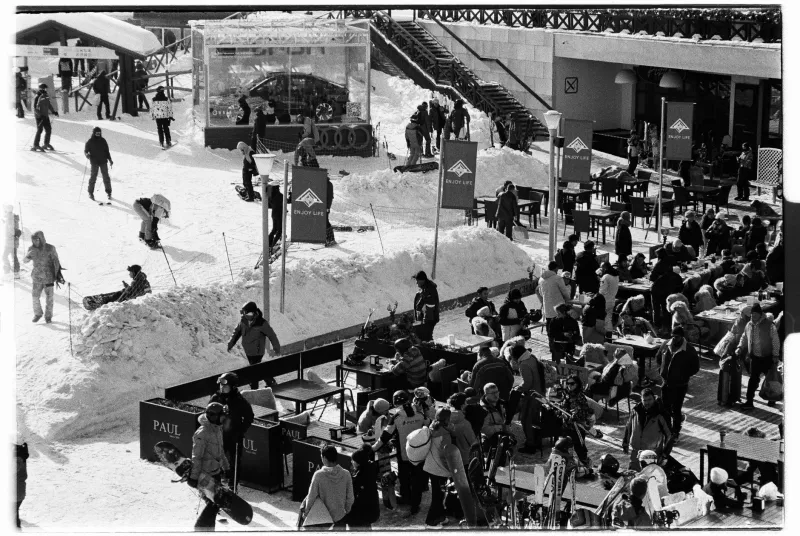
Après-ski is one of the great cons of the winter holiday: you pay for a lift pass, then spend the best part of the afternoon celebrating the fact that your legs still work. Nobody books an Alpine week to sit in a chalet with a herbal tea. But there’s a difference between a good après session and a full-scale self-sabotage operation at 2,000m. The aim here isn’t abstinence. It’s making sure you get your money’s worth from the mountain, not just the bar tab.
UK riders tend to arrive at altitude with pub instincts and holiday enthusiasm. That combination is brilliant fun on a Friday night in Leeds. In a French resort at 1,900m, with dry air, a day of skiing in your legs and a happy hour that starts before you’ve taken your boots off, it’s a trap. The plan below is not a lecture. It’s a set of slope-ready rules that let you have the beer and still make the first chair.
Altitude Is a Force Multiplier, Not a Free Pass
Alcohol doesn’t magically become stronger at altitude, but your body is already working harder. You’re breathing more, losing moisture with every exhale, and sleeping less deeply than you would at sea level. Add booze — a diuretic that also mucks about with sleep quality — and you’ve stacked three small problems into one large morning headache.
This is why a couple of drinks that would barely register in the UK can feel like a full night out in the Alps. You’re not imagining it. You’re also not 21 any more, even if the ski boots give you a false sense of youth. Treat altitude as a force multiplier: same drink, bigger consequences.
There’s also the resort-measure issue. A génépi after dinner, a bombardino at 3pm, a chalet-host pour of red that would make a Wetherspoons manager blush — the ABVs and measures vary. A 250ml glass of red is roughly three units; a pint of standard lager is a bit over two. Those numbers don’t change at altitude, but your ability to bounce back from them does.
Set the 11pm Ceiling Before You Leave the Chalet
The most useful decision you’ll make all day happens before the first drink, not after the fourth. Pick a last-orders time and stick to it. For the first two days at altitude, make it 9:30 or 10pm. Once you’re acclimatised, 11pm is a sensible ceiling. If you’re on a short trip, be stricter, not looser.
This isn’t a curfew. It’s a budget. You can spend it however you like — one big glass of something decent, two beers with a long chat, a vin chaud at lunch and a dry evening — but you can’t spend more than you’ve got. The riders who consistently get the most out of a week are not the ones who never drink. They’re the ones who decide when to stop before the bar decides for them.
A practical trick: tell the group at the start of the evening. Not in a preachy way, just a normal one. I’m on the 11pm ceiling tonight. It stops the rounds culture from dragging you past your limit and gives your mates something to work with when the shots appear.
Water Timing Beats Water Volume
Chugging a litre at midnight is not a hydration plan; it’s a wake-up call at 3am. Spread it out. Have a big glass of water before you leave the chalet, another when you get to the bar, and a glass between drinks. Keep a bottle by the bed and drink it before you go to sleep. If you’ve been sweating hard or the air is especially dry, an electrolyte tab in one of those glasses is a reasonable shout.
The goal is not to drown the evening. It’s to avoid the dry-mouth, cracked-lip, headache-on-waking version of tomorrow. Water is not a punishment served after the crime. It’s part of the session.
Eat Like You Mean It
Apres-bar crisps are not dinner. Neither is a bowl of peanuts and a sense of optimism. Get proper food in — something salty, carby and substantial. Tartiflette, pasta, a decent burger, curry night in the chalet, whatever the resort does well. Food slows the whole process down and gives your body something to work with other than regret.
If you’re on a chalet-cooked night, don’t skip dinner to keep drinking. That’s how a fun afternoon becomes a wasted evening and a written-off morning. And if the fondue comes with a free-flowing wine policy, remember that the wine is not actually free. You’re paying for it on the first lift tomorrow.
Know the Resort Rhythm — and Break It
French resorts tend to hit happy hour hard around 4-6pm. Austrian après is a contact sport with schnapps. Italian bars will sell you a bombardino that tastes like pudding and behaves like a small explosive. Swiss mountain bars are often deceptively civilised until someone orders a round of something clear and locally brewed.
The UK rider’s advantage is that we’re used to pacing a pub session. Use it. Alternate alcohol with water, choose a long drink over a shot, and avoid the group round that turns into a race. Buy your own drinks if that’s what it takes. A round of Jägerbombs at 2,000m is not team spirit; it’s a group nap with a side of regret.
Pick one signature drink and make it last. A slow beer with a view beats three rushed ones at the bar. If the après band is good, you don’t need to be drunk to enjoy it. If it’s bad, leave. There’s no rule that says you have to stay until the last song.
The Morning-After Protocol
Even with a plan, some nights get away from you. The morning protocol is simple: water and electrolytes before bed, a proper breakfast, and an easy start. Coffee is fine, but don’t use it to mask a genuine problem. If you’re dizzy, nauseous, or have a headache that won’t shift, don’t go straight up the mountain and pretend you’re fine. Altitude illness is a real thing, and a hangover plus altitude is a rotten combination. Get assessed if you’re unsure.
Don’t do hair-of-the-dog. A morning beer at altitude is not a cure; it’s a delay. Get some food, get hydrated, and ride easy on the first couple of runs. If you feel truly awful, sit it out. The mountain will still be there after lunch.
When to Call It
Call it when the room starts moving in a way the piste map doesn’t explain. Call it when you’re cold and sweaty at the same time. Call it when you’ve stopped wanting food, or when you’re arguing about the best way to get home with someone who is clearly more sober than you. Call it when you realise you’re not enjoying the music, the company, or the view — you’re just still there.
That’s not weakness. That’s judgment. The best riders I know aren’t teetotal. They’re decisive. They know that a great ski week is built on mornings, and mornings are built on the night before. So enjoy the après. Have the beer. Have the vin chaud. Just set your ceiling, drink your water, eat your dinner, and walk away while the night still belongs to you. First lift is a much better place to be than last orders.