Colour Me Cautious: The UK Rider’s Field Guide to Alpine Piste Ratings
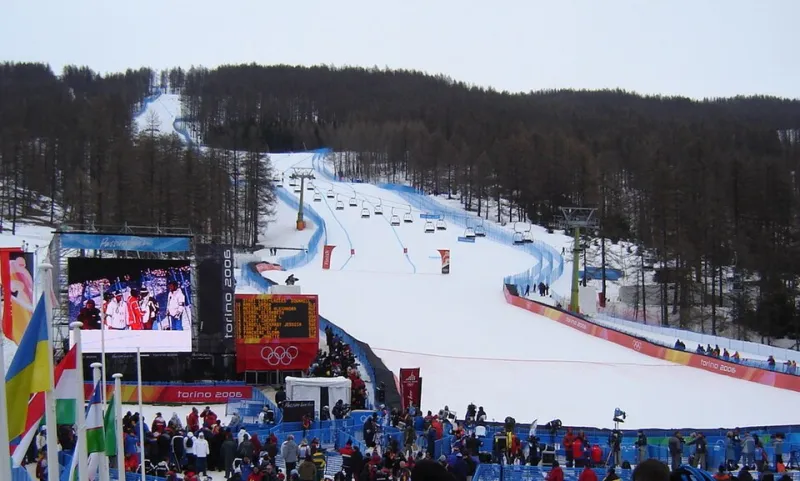
Photo: Gabas, CC BY-SA 4.0, via Wikimedia Commons
There’s a moment on every UK rider’s first Alpine morning when the map looks beautifully simple. Blue means easy. Red means intermediate. Black means expert. Then you clip in, follow the blue down, and discover that this particular blue is a steep, rutted, icy ramp with a drop-off on one side and a queue of French teenagers overtaking you like you’re standing still.
Welcome to the piste-rating reality check. Alpine colours are not a universal language. They are a local shorthand, shaped by the resort, the lift company and the kind of terrain they expect you to have ridden before. For riders whose home slope is a dome near Manchester or a wind-scoured patch of Cairngorm, that gap matters more than any gear upgrade.
Blue is not beginner — it is a suggestion
In the UK, we tend to treat trail colours as a ladder. Indoor centres often use a similar system, and Scottish hills compress everything into a small, weather-dependent package. In the Alps, the colour is more like a restaurant’s spice rating: useful, but not legally binding. A blue in one resort can be a gentle motorway; a blue in another can be a narrow shelf with a blind corner and a surface that changes from packed powder to boilerplate by lunchtime.
The key is to stop asking ‘what colour is it?’ and start asking ‘what is it asking me to do?’ A blue that requires constant turning on a pitch is very different from a blue that runs straight and wide. A blue with a steep pitch below a lift station is a different beast from a blue that meanders through a village. The colour tells you roughly where it sits in the local hierarchy, not how it will feel under your edges.
France: wide, fast and occasionally fierce
French resorts are masters of the broad, confidence-building blue. Many are groomed to a racing standard and can make a nervous rider feel like a hero. But France also has blues that cross open bowls, pass under chairlifts and funnel into busy junctions. The infamous ‘blue that skis like a red’ usually lives near a major lift hub, where traffic and moguls build up.
When you open a French piste map, look at the contour lines and the number of lift crossings. A blue that shadows a red for most of its length is often steeper than the colour suggests. Also check the altitude: a south-facing blue at 1,500 metres in late March is a very different proposition from the same colour at 2,300 metres in January. If you’re heading out for 2026/27, favour blues above the mid-station for your first run and save the lower, warmer slopes for the afternoon.
Austria: the colour may be right, the surface may not be
Austrian resorts often have a more intuitive map, but their blues can be deceptive in a different way. Many are long, rolling and beautifully prepared, yet they often run through shaded valleys where the snow stays firm. That can be brilliant for learning to carve and less brilliant for a first-timer who hasn’t yet worked out how to trust an edge on hardpack.
The Austrians also love a piste that starts as a blue and finishes as something else. Read the map’s symbols carefully. A blue with a steep final pitch back to the gondola may be marked blue because the official difficulty is measured over the whole run, not the bit that will make you question your life choices. If you’re with a mixed-ability group, pick a blue with a lift at the bottom, so anyone can bail out without committing to a red descent.
Italy: generous groomers, local quirks
Italy is often the UK rider’s friend when it comes to wide, forgiving blues. The Dolomites in particular have a reputation for superb grooming and a sensible approach to progression. But don’t assume every blue is a beginner’s boulevard. Italian resorts can have long, linking traverses that are flat enough to be tiring on a board, and some blues include short, steep pitches that demand a confident turn.
One useful trick is to check the vertical drop against the length. A blue that drops 500 metres over three kilometres is a gentle cruise. A blue that drops 400 metres over one kilometre is a proper slope, whatever colour the map gives it. That simple bit of maths will save you from more than one unpleasant surprise.
Switzerland: small resorts, big character
Swiss maps are often beautifully detailed, and that detail is your friend. Look for the piste profile, the snowmaking symbols and the transport links. A blue in a small Swiss resort may be short and sweet, but it may also be a narrow farm track with a fence on one side and a three-metre drop on the other. The colour doesn’t tell you that. The map might.
Switzerland also rewards riders who use the mountain’s lift system intelligently. If a blue looks questionable, ride the gondola up and take the next blue down. There’s no shame in using the lift as a recce. In fact, it’s one of the smartest things a UK rider can do on day one.
A practical map-reading routine
Before you leave the hire shop, spend five minutes with the piste map and do this:
- Find your base. Mark the lifts closest to your accommodation and the easiest blue back to them.
- Check the vertical. Divide the run’s vertical drop by its length. A steep ratio means a steeper pitch, even if the colour is friendly.
- Look for junctions. Busy intersections breed moguls and nervous traffic. Avoid them on your first run.
- Read the snowmaking markers. A blue with snowmaking is more likely to be reliable in a lean season.
- Identify bail-out points. Choose runs with a lift or a blue alternative halfway down.
First-day tactics that actually work
Start higher than you think. Lower slopes get warmer, busier and slushier as the day goes on. A top-to-bottom blue at 9am is often a different run by 2pm. Warm up on a short, wide blue near the mid-station, then progress to something longer once your legs remember what they’re doing.
If you’re coming from an indoor centre, don’t underestimate the altitude and the scale. The snow will feel different, the run will be longer, and your turns will need to be more efficient. Give yourself permission to ride the same blue three times. It’s not a lack of ambition; it’s a smart use of a lift pass.
And if a blue feels beyond you, turn around. There is no medal for finishing a run that scares you. The mountain will still be there tomorrow, and the best UK riders are the ones who come home buzzing rather than battered.
The bottom line
Alpine piste colours are a starting point, not a guarantee. Read the map, check the vertical, watch the surface and trust your own eyes. A blue can be the best run of your week or the reason you spend the afternoon in the boot room. The difference is usually preparation, not bravery. For 2026/27, make the map your first lift of the day.