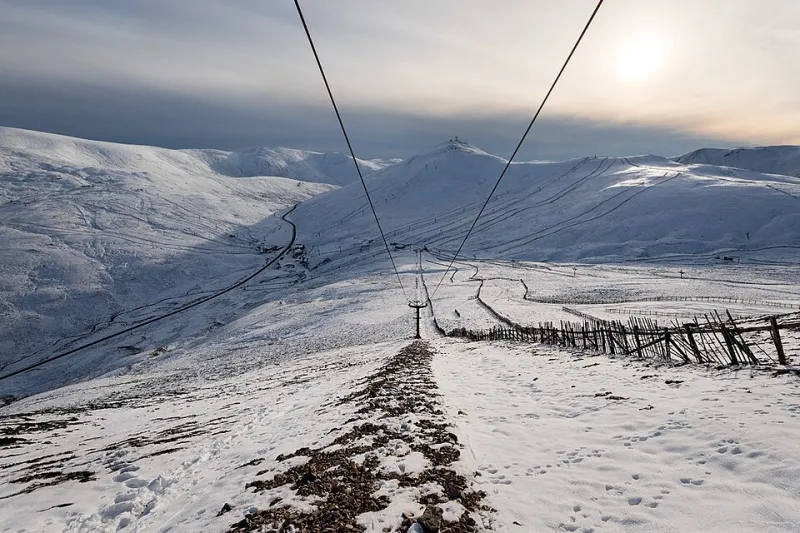
The Driveway Dress Rehearsal: Winter Tyres, Chains and the Hire-Car Clauses UK Drivers Miss
Photo: Norfolk County Council, Erica Darch, 2005-05-24 11:06:13, CC BY-SA 4.0, via Wikimedia Commons
There’s a moment on every fly-drive alpine trip when the romantic version of the plan meets the reality of a dark car park, a hire-car handbook written in three languages, and a sign saying chains obligatory. The gap between those two scenes is usually closed — or not — long before you reach the mountains. It’s closed at the rental desk, in the small print, and on your own driveway with a stopwatch.
For 2026/27, the rules across France, Switzerland, Austria and Italy are broadly familiar but fiddly enough that a lot of UK drivers assume the hire company has sorted it. Sometimes they have. Often they’ve sorted their liability, not your confidence. This is the pre-booking tyre and chain check that stops a brilliant week starting with a shrug and a recovery truck.
The bit the rental desk won’t volunteer
When you book a car for a winter trip, the confirmation usually mentions winter tyres somewhere between the fuel policy and the excess. What it rarely does is spell out the practical chain:
- whether the car is actually fitted with three-peak mountain snowflake (3PMSF) tyres or just all-seasons;
- whether chains are permitted on that model at all — some rentals prohibit them to protect wheels, arches and driveshafts;
- whether you must buy or hire the chains from the rental company, and at what daily rate;
- whether damage caused by fitting chains badly is excluded from the excess cover.
That last point matters. Chains that are the wrong size, or fitted to the wrong axle, can chew a wheel arch in a few hundred metres. If the contract says chains are not permitted, you are not covered — even if a helpful person at the depot handed you a set. Ask for written confirmation of the tyre type, chain policy and any extra charge before you pay the deposit. A screenshot in your phone is worth more than a chat at the counter.
Country by country: the short version
France. In mountainous areas, winter tyres are mandatory from 1 November to 31 March. The tyres need the 3PMSF marking or the older M+S marking, and local signs can require chains or snow socks. In practice, a hire car collected in Lyon or Geneva may not have proper winter rubber unless you specify it. Ask, then ask again.
Switzerland. There is no blanket legal obligation to run winter tyres, but winter conditions change that in practice: if you block a road or cause a crash on summer rubber, you can be treated as having failed to adapt. Mountain passes often require chains. Swiss rental fleets are usually well prepared, but “usually” is not a contract term.
Austria. Winter tyres are required in wintry conditions between 1 November and 15 April — and “wintry conditions” includes slush, snow and ice, not just a full blizzard. Chains must be fitted when signs demand them, and they must go on the driven wheels. Austrian police are not sentimental about this.
Italy. Many regions require winter tyres or chains from 15 November to 15 April. Where signs require chains, you must fit them, not simply carry them. Italian mountain roads can switch from clear tarmac to chain-only in a few bends, especially on the approach to smaller resorts.
The common thread is simple: carrying chains is not the same as being legal when signs say chains obligatory. You need to know how to fit them, and you need to know the car will accept them.
The 20-minute driveway rehearsal
This is the bit most UK riders skip. You don’t need an alpine pass to practise. You need a driveway, a pair of gloves, a headtorch and the chain set that matches your hire car’s tyre size. If you don’t have the car yet, borrow a set from a friend or buy the cheapest practice set in the right size — the muscle memory is the point, not the brand.
- Lay everything out in the order you’ll need it. Chains, tensioner, gloves, mat or bin bag to kneel on.
- Read the instructions once, out loud, in the cold. This is what you’ll be doing at 1,600m in fading light.
- Fit the chain to a front wheel — most hire cars are front-wheel drive, but check. Practise getting the chain over the tyre without trapping your fingers.
- Tension it, check it, then do it again. The second fit is always faster.
- Time yourself. If it takes 40 minutes in daylight on a dry driveway, it will take longer in slush beside a barrier.
The goal is not to become a rally mechanic. It’s to know which way the hook faces, how much slack to leave, and how to admit to yourself that a particular set is a nightmare before you’re halfway up a mountain. A 20-minute rehearsal at home is cheaper than a missed first lift.
When to leave the car in the depot
Some trips are better without a hire car. If your resort is a pedestrian village with a reliable shuttle, if parking is a lottery, or if the last mile is a chain-only access road, the rental car can become a liability. That is especially true if:
- the rental company cannot confirm winter tyres in writing;
- chains are prohibited on your booked model;
- you’re arriving late and the first drive is in the dark;
- you’re not confident fitting chains in bad weather;
- the resort charges more for parking than the shuttle costs for the week.
This isn’t defeat. It’s choosing the version of the holiday where you arrive at the chalet with dry socks and a lift pass, rather than a story about the time you reversed into a snowbank. For 2026/27, a lot of alpine villages have improved their transfer links. Check the shuttle timetable before you default to fly-drive.
The booking-day checklist
Before you click pay, put these in the notes app:
- tyre type confirmed in writing — 3PMSF, not just “winter ready”;
- chain policy confirmed for the exact model;
- cost of rental chains versus buying your own;
- excess cover position on chain damage;
- tyre size so you can practise or buy chains before you fly;
- shuttle alternative if the forecast turns.
None of this is glamorous. But the best alpine drives are the boring ones: the car is legal, the chains fit, and the only drama is deciding where to stop for coffee. Do the driveway rehearsal now, ask the awkward questions at booking, and keep the mountain for the skiing.