Bench-Free, Faff-Low: Home Waxing and Edge Care for UK Riders Heading to the Alps
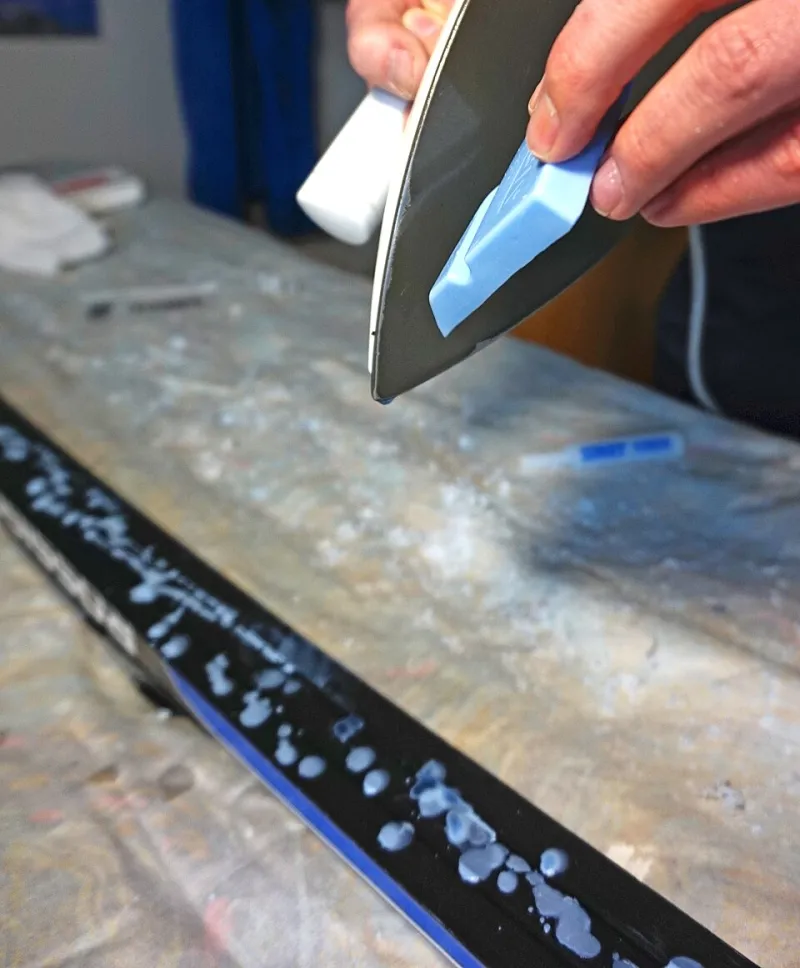
Photo: Tiia Monto, CC BY-SA 4.0, via Wikimedia Commons
There is a particular kind of UK pre-trip panic: you pull your skis or board out of the shed, notice a dry base and a few rusty edges, and start mentally adding £60 to the holiday budget for a resort tune. You can skip that. A simple home routine will not turn your kit into a race-room special, but it will protect the base, keep the edges predictable and save you a chunk of cash.
Why bother at home?
Resort workshops are convenient, but they are also busy, pricey and sometimes rushed in peak weeks. A basic wax and edge check before you travel means your kit starts the trip protected. It also gives you a chance to spot damage — a gouge, a loose screw, a cracked edge — before you are standing in a hire shop queue at 8am.
The other benefit is control. You know what wax went on, how the edges were treated and whether the base was cleaned properly. For UK riders who store kit in flats, garages or cupboards, that matters.
Starter kit that earns its shelf space
You do not need much. A dedicated waxing iron — not the family clothes iron, unless you want domestic trouble — is the one proper purchase. Add an all-temperature wax, a plastic scraper, a nylon brush, a base cleaner, a couple of rags, a diamond stone and a simple edge tool with a file guide. A rubber gloves-and-dust-sheet combo finishes the job.
If you are buying from scratch, budget around £60–£90 for a sensible starter set. That sounds like a lot until you price a couple of resort tunes. Buy one decent all-temp wax rather than five specialist blocks you will never use.
Pick a flat-friendly workspace
A kitchen floor, a balcony, a garage corner or even a sturdy table with a old towel over it will do. Lay down a dust sheet or newspaper. Work near a window or door for ventilation. If you are in a flat, keep the waxing area small and contained: one board or one pair of skis at a time, tools in a tray, scraps into a bin bag.
You do not need a proper tuning bench. A pair of cheap rubber ski straps or a rolled towel under the bindings can hold skis steady enough for home waxing. For a snowboard, rest it on two chairs with towels underneath — carefully — or use a low table. The aim is stability, not showroom perfection.
The routine: 40 minutes, start to finish
-
Clean the base. Use base cleaner and a rag to remove old dirt and wax residue. Let it dry.
-
Check the edges. Run a gloved finger along the edge — carefully — and look for burrs, rust or obvious damage. A diamond stone with a little water or oil will knock back light rust and burrs. Do not go wild with a file unless you know what you are doing.
-
Wax. Set the iron to a low setting — wax should melt and glide, not smoke. Drip wax along the base, then iron it in with smooth passes. Keep the iron moving.
-
Cool. Let the wax set for 15–20 minutes. If you are in a hurry, a quick pass with a scraper after it has firmed up is fine, but cooler wax scrapes better.
-
Scrape. Use a plastic scraper at a shallow angle. Scrape from tip to tail, letting the wax come off in thin ribbons. Do not gouge the base.
-
Brush. Nylon brush tip to tail to clear the structure and leave a smooth finish. If you only do one brush pass, do this one.
-
Tidy up. Wax shavings go in the bin, not down the sink. Wipe tools, close the wax, and put everything back in one box so the next tune-up is not a hunt.
What to skip
Skip base grinding, complex bevel work and multiple wax types unless you are genuinely interested in tuning. Skip expensive edge machines and heat guns. Skip the temptation to sharpen edges to a razor unless you ride ice regularly — a overly aggressive edge can feel hooky and unpleasant.
Also skip the idea that you need to wax after every single day. For a one-week trip, a good pre-trip wax and a mid-trip top-up is plenty for most recreational riders. If conditions are wet and warm, a soft wax helps; if it is cold and dry, a harder wax is better. But one all-temp wax will get you down the mountain.
Routine beats resort prices
A resort tune can cost £30–£60 depending on the shop and the job. A basic home kit pays for itself after a couple of trips, and you will notice the difference most in slow flats, lift queues and the first morning on a cold base. More importantly, you will know your kit is ready before you get on the plane — or, for the 2026/27 season, before you load the car for the drive to the Alps.
Do it once, do it simply, and put the saved money towards a better day on the hill.