Snowline Auditing: How to Interrogate a Resort's Snow Record Before You Book 2026/27
Every resort website leads with a big number. One hundred and eighty centimetres at the top. Two metres in the bowl. It looks authoritative, it is photographed beautifully, and it tells you almost nothing about whether your half-term week in 2026/27 will be a joy or a ribbon of slush between rocks.
Base depth is a single measurement, at a single point, on a single day, and resorts choose which point and which day. It is a marketing asset as much as a snow report. So instead of trusting the hero number, do what a decent weather nerd does: audit the mountain. Below is the framework we use at SnowHead to separate the genuinely snow-sure from the lucky.
Start with altitude bands, not a single altitude
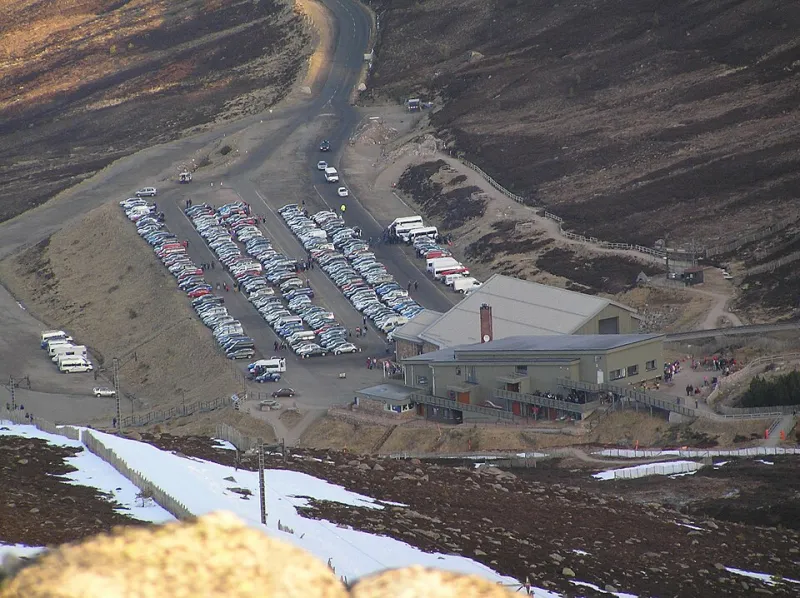
A resort's quoted altitude is nearly always its summit or its highest lift. That figure is fine for Instagram and useless for planning. What matters is the shape of the vertical.
Ask three questions:
- Where does the skiing actually start and finish? Village level, lift base, top station.
- How much of the marked terrain sits above 2,000m? Above 2,400m?
- What is the return run like — a genuine piste back to the door, or a download on the lift?
A resort that tops out at 2,700m but drops you back to 1,050m every afternoon has a split personality. The upper half may be superb in January and grim in April; the lower half may be a queuing exercise in a warm snap. Meanwhile a resort with a modest 2,300m summit but a base at 1,850m keeps far more of its terrain in the reliable band.
Practical rule: the gap between base and summit is the vertical you are paying for, and the height of the base is the risk you are accepting.
Aspect: the compass point that decides your Easter
Slope aspect is the most under-read variable in snow planning. A north-facing bowl holds cold snow long after a south-facing one has turned to porridge. Resorts whose terrain faces away from the sun, or which sit in a shaded valley arm, will hold cover later into the season and recover faster after a thaw.
Look at a piste map with a compass in your head. North and north-east facing slopes are your friends in March and April. South-facing terrain can be glorious in December and January — the light is better, the snow softens nicely — but it is the first to go.
This is also where micro-geography matters more than resort reputation. Two resorts at the same altitude, twenty minutes apart, can have wildly different late-season fortunes because one faces the sun and the other does not. If you are booking a late-season week, weight aspect heavily. If you are booking mid-January, altitude matters more than aspect.
Snowmaking coverage: read the percentage, then read the fine print
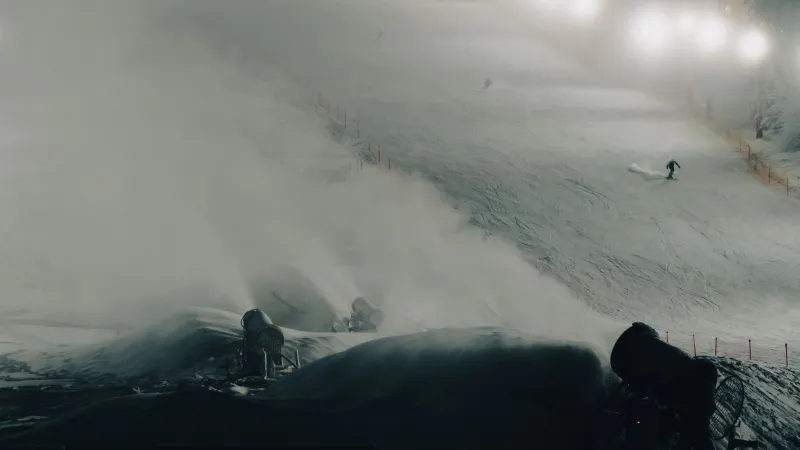
Snowmaking is now standard across the Alps, but coverage is not equal, and the percentage quoted on a resort page usually refers to marked piste kilometres, not to the whole mountain. A 60% figure sounds generous until you realise the covered runs are the motorway cruisers back to the village and nothing else.
Four things to dig out:
- Percentage of marked pistes covered by snowmaking.
- Reservoir and water capacity — a resort that cannot refill its reservoirs in a dry December will stop making snow when you need it most.
- Whether the system works at the temperatures your week realistically delivers. Snowmaking needs cold, dry air; a resort that relies on it at 1,500m is gambling.
- Snow farming — summer storage of snow under sawdust or fleece. It sounds like a gimmick, but resorts that farm snow genuinely protect their access runs and race pistes for early-season openings.
Snowmaking buys you a ribbon. It does not buy you a mountain. Treat a high coverage figure as a bail-out clause, not a guarantee.
Now the record: how to read five seasons in fifteen minutes
Most resorts publish a snow history page, and third-party snow-depth archives cover the big names going back years. Ignore the averages. Averages hide disasters.
Instead:
- Find the depth history for the exact week you plan to travel, across at least five seasons.
- Identify the worst of those five. Would you still have enjoyed the holiday?
- Cross-check the official opening and closing dates actually achieved, not the ones advertised. A resort that repeatedly closes early is telling you something.
- Check whether the terrain open in the poor seasons was the interesting terrain or just the valley runs.
- Watch a couple of archived webcams from a lean year if you can find them. Nothing beats seeing it.
If a resort survives its worst recent season with most of its upper mountain open, that is your snow-sure candidate.
The SnowHead Matrix: score it out of 20
Give each shortlisted resort a score on five lines.
- Altitude security (0–5): base height, proportion of terrain above 2,000m, top station.
- Aspect and retention (0–5): north-facing bias, shaded valley, late-season performance in the record.
- Snowmaking cover (0–4): percentage, reservoir capacity, cold-air reliability, snow farming.
- Record consistency (0–4): worst-season performance over five years, achieved opening and closing dates.
- Return and access (0–2): can you ski back to the village or lift base, and how exposed is that run?
Fourteen or above is genuinely snow-sure. Ten to thirteen is a solid bet with a good chance of a lean patch. Under ten, you are booking hope.
Worked example: high, cold and reliably dull
Take a classic high French resort with a base around 1,800m, a summit near 3,000m, a big north-facing sector and snowmaking across most valley returns. Altitude 5, aspect 4, snowmaking 3, record 4, return 2 — 18 out of 20. You will almost certainly ski, but you will pay for it, and you may spend the week in flat light and a windblown bowl.
Worked example: modest height, monster snowmaking
A lower resort at 1,100m with a 2,300m summit, south-facing main slopes but heavy investment in snowmaking and snow farming. Altitude 2, aspect 2, snowmaking 4, record 3, return 1 — 12 out of 20. Fine for a January week, risky in April, and heavily dependent on cold snaps.
Worked example: the wildcard
A mid-altitude Italian or Austrian valley with north-facing upper slopes, patchy snowmaking and a superb historical record but a low, sun-exposed return. Altitude 3, aspect 4, snowmaking 2, record 4, return 1 — 14 out of 20. Not glamorous, quietly reliable, and often cheaper than its neighbours.
The fifteen-minute pre-booking routine
Open the snow history page, the piste map and the snowmaking report in three tabs. Score the matrix. Then ask the only question that really matters: if this turns out to be the worst of the last five years, is this still the holiday I want? If the answer is yes, book it. If it is a shrug, your shortlist is not finished.